
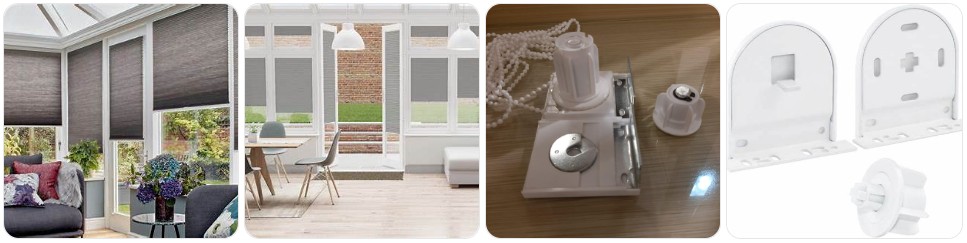
If you are dealing with worn fittings, sagging fabric, snapped cords, or roof-blind hardware that no longer holds tension, this guide explains the most common Conservatory Blind replacement parts to look for and how to choose them. Conservatory blinds are more specialized than standard window blinds because they often fit roof panels, angled glazing, and high-heat spaces, so the correct part matters. Below you will find the most useful parts to buy, the signs a part has failed, how to identify the right match, and when it makes more sense to repair instead of replacing the whole blind.
Buy Conservatory Blind Parts Online
These small end fittings help keep pleated conservatory roof blinds running neatly along side wires or guide rails. When they crack, loosen, or stick, the blind can sag, twist, or stop retracting smoothly. » find on amazon / find on ebay
End caps protect the edges of the headrail, bottom bar, or side profile and help aligned movement at the blind ends. Missing or broken caps can cause rubbing, poor tracking, exposed sharp edges, and extra wear during daily operation. » find on amazon / find on ebay
Roof and shaped conservatory blinds often rely on guide wires to hold the fabric close to the glazing. Frayed, stretched, or rusted wires can make the blind bow outward, wobble, or fail to stay neatly tensioned. » find on amazon / find on ebay
These fittings secure the guide wires at each end of the blind system and are especially important on sloped conservatory roof panels. If the anchors pull loose, the blind usually loses its shape and tracking stability fast. » find on amazon / find on ebay
Support brackets hold the blind headrail or profile securely to the conservatory frame. In hot conservatories, repeated expansion and contraction can loosen brackets over time, causing rattling, uneven hanging, and extra strain on every moving part. » find on amazon / find on ebay
Some conservatory blinds use cord-operated locking systems to hold the blind at the chosen position. When the lock slips or jams, the blind may drift downward, bunch unevenly, or become difficult to raise without forcing the mechanism. » find on amazon / find on ebay
Many roof blinds are opened and closed with extension poles, pull handles, or wands because the glazing sits overhead. Replacing a cracked handle or missing wand makes operation safer and helps prevent fabric tugging from the wrong point. » find on amazon / find on ebay
Pleated conservatory blinds often use small clips or retainers to keep the fabric seated correctly in the rail system. When these fail, pleats can skew, drag along the frame, or stack badly at one end. » find on amazon / find on ebay
A repair kit is useful when multiple small parts have worn out at once, such as cords, clips, wire fixings, handles, and brackets. It is usually the most practical starting point for older conservatory blind systems with scattered failures. » find on amazon / find on ebay
Signs You Need Replacement Parts for Your Conservatory Blind
- The blind sags away from the roof glass: On conservatory roof blinds, this usually points to stretched guide wires, damaged tension shoes, or loose wire anchors rather than a simple fabric issue. Replacing the support hardware is often more effective than replacing the fabric alone.
- The blind slides unevenly across one roof panel: If one side moves faster than the other, check for broken end caps, bent side channels, or worn guide wire parts. Uneven travel is one of the clearest conservatory-specific warning signs that the tension system is no longer balanced.
- The pleated fabric bunches tightly at one end: Conservatory pleated blinds should stack evenly. If the pleats pile up to one side or rub the glazing bars, the likely causes are failed pleat retainers, slipping cords, or side fixings that have moved out of line.
- The blind drops back down after you raise it: On manually operated conservatory blinds, this often means the cord lock or retaining mechanism is worn. Before replacing the whole blind, inspect the locking hardware and any matching replacement cord lock.
- You hear clicking, scraping, or metal-on-metal noise overhead: Conservatory blinds mounted in roof sections should move with minimal noise. Scraping usually means the blind is no longer centered, a bracket has shifted, or an end fitting has cracked and is rubbing during travel.
- The pull handle or extension wand no longer feels secure: Because many conservatory blinds are operated above head height, a weak handle quickly becomes a safety and usability problem. Replacing the handle or wand is cheaper than risking damage by pulling directly on the bottom rail.
- The blind performs worse during hot afternoons: Conservatories face more temperature stress than standard rooms. If the hardware works in the morning but binds in midday heat, check for warped brackets, over-tightened guide wires, or brittle plastic clips that have degraded from repeated heat build-up.
- Fixings loosen from the frame more than once: Conservatory structures expand and contract more than ordinary wall-mounted blind locations. Repeated loosening often signals that the original anchors, screws, or bracket style are no longer holding properly and should be replaced together.

Vertical Blinds Replacement Stem and Gear Used for Headrail, Carrier Stem Vertical Blinds Curtain Accessories(12 Sets)
SOGEWO (16 Set/32 Pieces) Clear Vertical Blind Repair Tabs, Vertical Blinds tabs/Blind Fixers for Vertical Blinds Replacement Slats & Parts
How to Identify the Right Conservatory Blind Replacement Part
- Start with the exact blind location: Check whether the failed part comes from a roof blind, side blind, gable blind, or shaped conservatory panel. Conservatory systems often use different fittings for overhead sections than they do for vertical window sections, even when the fabric looks similar.
- Match the tension system before anything else: If your blind runs on guide wires, side channels, or a free-hanging corded setup, identify that first. A replacement clip or bracket that looks close can still fail if it is designed for a different tension method.
- Measure the rail and fixing points carefully: Take note of the headrail width, bottom bar width, bracket spacing, wire diameter, and hole positions. Conservatory blinds are frequently made to fit narrow roof panels, so a few millimeters can be the difference between a clean fit and a part that binds.
- Check whether the blind is pleated, cellular, or roller-based: Many conservatory blinds are pleated, but some use roller cassettes or specialist roof systems. Before ordering from an online conservatory blind parts search, confirm the part matches the blind construction, not just the room type.
- Look at the part under heat damage, not just shape: Conservatory hardware often turns brittle, fades, or slightly warps from sun exposure. A cracked shoe, yellowed clip, or bowed bracket may appear usable at a glance but still be the reason the blind no longer tracks correctly.
- Compare left-hand and right-hand fittings separately: On many conservatory systems, side fixings and guide components are mirrored. Do not assume a part from one side can be flipped to fit the other, especially on angled roof sections where handedness matters.
- Use photos of the blind in both open and closed positions: A single close-up is not always enough. Take one photo of the broken part and another showing how the blind sits in the conservatory frame so you can match end caps, supports, and wire routing more accurately.
- When several pieces are worn, buy a kit instead of one fitting: If the blind has brittle clips, stretched wires, and a slipping lock, a conservatory blind repair kit is often the better choice because the parts will usually be designed to work together.
Should You Repair or Replace the Whole Conservatory Blind?
In many cases, repairing a conservatory blind makes sense because the failure is often concentrated in the hardware rather than the full blind assembly. A sagging roof blind, a slipping cord lock, or a broken tension shoe can usually be fixed for far less than the cost of ordering a full replacement blind, especially when the fabric is still clean, evenly pleated, and not sun-damaged. If the issue is isolated to brackets, guide wires, handles, or clips, buying targeted conservatory blind replacement parts is usually the most economical move.
Replacing the whole blind becomes the better option when the fabric has faded heavily, multiple parts have failed at once, the rail system is warped, or the blind no longer fits the conservatory frame correctly. This is especially true in older conservatories where years of heat build-up have weakened both plastic fittings and the blind material itself. If you are already pricing several separate components and the list keeps growing, compare that total against a new conservatory blind before committing to a repair.

GhostBlind Runner 26" 6-Panel Ground Hunting Blind and Accessories, Ideal for Turkey and Deer Hunting

Window Opener Blinds Adjustable Opening Stick | Adjustable Window Opener Rod for Kitchen Bedroom School Apartment Dormitory Living Room Attic Commercial

Blackout Roller Blinds No Drill Thermal Insulation & Privacy Suction Cup Portable Shades for Bedroom & Conservatory, Easy Install Retractable Design, Light Blocking, Energy Efficient
How to Prevent Parts Damage to Conservatory Blind
- Operate roof blinds from the correct pull point: Use the fitted handle, pole, or wand instead of tugging the pleated fabric or bottom bar edge. On conservatory blinds, pulling from the wrong place puts uneven strain on guide wires and side fixings very quickly.
- Keep guide wires properly tensioned, not overtightened: Conservatory blinds need enough tension to stay close to the glazing, but wires that are too tight can stress anchors and crack plastic shoes. Balanced tension matters more than maximum tension in hot roof spaces.
- Clean dust from side channels and pleat paths regularly: Fine dust, insect debris, and conservatory condensation residue can build up in the running path. Wiping those areas gently helps prevent friction that wears clips, retainers, and tracking edges long before the fabric itself fails.
- Avoid forcing the blind during peak heat: Conservatory hardware expands in strong sun. If the blind feels stiff in the hottest part of the day, do not yank it harder. Let the room cool slightly, then inspect for warped fittings or dried-out moving parts instead.
- Re-tighten loose brackets before the blind starts rubbing: A slightly loose bracket can turn into rail misalignment, scraping, and cracked end fittings over time. Checking supports seasonally is one of the simplest ways to protect overhead conservatory blind hardware.
- Replace small worn parts early: A cheap end cap, guide wire fixing, or handle is easier to replace than a full blind damaged by repeated misalignment. Minor conservatory blind part failures tend to spread because the load shifts onto the remaining hardware.
- Control moisture and condensation around the blind system: Conservatories can swing between heat and damp conditions. Reducing condensation helps protect metal fixings from corrosion and prevents grime from collecting on cords, guide wires, and moving support parts.
- Store spare matching parts if your blind is older: Conservatory blind systems are often more specialized than standard room blinds. If you find compatible clips, brackets, or a repair kit, keeping a spare set can save time when one roof section suddenly fails.
Conservatory Blind Parts FAQ
What are the most common conservatory blind replacement parts?
The most common parts are guide wires, tension shoes, wire anchors, brackets, cord locks, pull handles, end caps, and pleat retainers. On pleated roof blinds, the tension and support hardware usually fails before the fabric does.
Can I use standard window blind parts on a conservatory blind?
Sometimes, but not reliably. Conservatory blinds often use more specialized fittings because they sit on roof panels, angled frames, or tensioned wire systems. It is safer to compare measurements and search specifically for conservatory blind parts rather than assume a standard blind fitting will work.
Why does my conservatory blind sag away from the glass?
This usually happens when guide wires have stretched, wire fixings have loosened, or the tension shoes have worn out. On conservatory roof blinds, sagging is much more likely to be a tension-system fault than a fabric fault.
Is it worth repairing an older conservatory blind?
It is often worth repairing if the fabric is still in good condition and the problem is limited to hardware. If several parts have failed together or the fabric has become brittle and faded from years of sun exposure, replacing the whole blind may be the better value.
How do I identify the correct guide wire or fixing?
Measure the wire diameter, the exposed length, and the fixing-hole positions, then compare those details with the original part. Take photos of both ends of the blind too, because left and right conservatory blind fittings can be handed and not interchangeable.
Should I buy separate parts or a conservatory blind repair kit?
If only one item is broken, buying a single part is usually fine. If the blind has several worn items such as clips, wires, and anchors, a repair kit is often more practical and can make compatibility easier.
Do conservatory blinds wear out faster than regular blinds?
They often do, especially in roof sections. Conservatories experience stronger sunlight, bigger temperature swings, and more expansion and contraction than many standard rooms, so plastic fittings, cords, and wire hardware can age faster.

60 PCS Vertical Blind Repair Tabs Kit Clear Fixer Verticle Blinds Snap in Replacement Slats Parts Panels
Vertical Blinds Replacement Stem and Gear Used for Headrail, Carrier Stem Vertical Blinds Curtain Accessories(12 Sets)
