
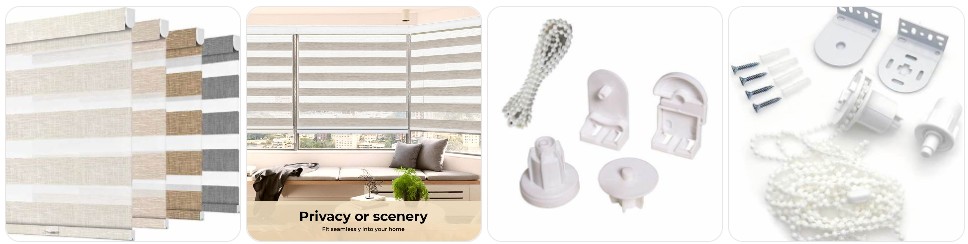
Zebra Blinds combine alternating sheer and solid fabric bands, which means repairs usually involve the clutch, bead chain, idle end, mounting brackets, roller tube, bottom rail, or the striped fabric alignment rather than slats or lift cords. The quick answer is that a broken zebra blind can often be repaired for much less than a full replacement if the fabric is still in good condition and the issue is limited to the hardware or one part of the rolling system. In many cases, the fix comes down to replacing a worn clutch, swapping a broken chain, correcting bracket movement, realigning the fabric wrap, or replacing a damaged idle end before the striped bands stop lining up properly. If you want to compare likely repair items while troubleshooting, it helps to browse zebra blind repair kits, zebra blind parts, and roller shade clutch replacements.
Fix Common Zebra Blind Problems & Repair Cost
The zebra blind slips down or will not hold position: This is one of the most common zebra blind repairs and usually points to a worn clutch mechanism on the control side. When the clutch starts failing, the blind may free-drop slightly, refuse to stay where you leave it, or stop lining up the striped bands correctly. In many cases, replacing the clutch is enough to restore smooth operation, and this is often a much cheaper fix than replacing the full blind. Small hardware repairs such as a clutch or chain replacement are often in the range of about $8 to $30 in parts, while a more complete mechanism refresh can cost more depending on tube size and bracket style. It helps to compare roller shade clutch replacements and zebra blind parts. Do not keep forcing the chain when the blind is slipping, because that can wear the mechanism even faster.
The striped bands no longer line up evenly: Zebra blinds depend on the front and back fabric layers rolling in sync, so band misalignment is a very zebra-specific problem. It is often caused by a slipping clutch, loose bracket, shifting idle end, or a tube that is no longer rolling squarely. If the fabric itself is still in good condition, correcting the hardware and realigning the wrap is often enough. If the fabric has stretched badly or telescoped across the tube, the repair may be more involved.
The chain skips, jams, or feels rough: A worn bead chain, damaged connector, or failing sprocket inside the clutch can make a zebra blind jerk during operation. Because the fabric bands need precise movement, even small chain problems tend to show up quickly in the blind’s open and privacy positions. Replacing the chain or the clutch is usually a low-cost repair, often around $5 to $20 for the chain and somewhat more if the clutch also needs replacing. Comparing bead chain replacements can help if the rest of the mechanism still looks sound.
One side of the blind hangs lower than the other: On a zebra blind, a tilted bottom rail usually means the bracket has shifted, the idle end is worn, or the tube is not sitting squarely in the mounting hardware. Because zebra blinds rely on even tracking, a small tilt can quickly affect the alignment of the sheer and solid bands. This repair often involves replacing or tightening the bracket set, checking the idle-end pin, and making sure the tube is fully seated.
The blind makes clicking or grinding noises: Noise during operation usually points to internal clutch wear, a chain that is not engaging cleanly, or a bracket that is placing the roller under uneven stress. This is often an early warning sign that a part needs replacing before the blind fails completely.
Zebra Blind Repair Kit
A zebra blind repair kit is most useful when the problem is clearly in the operating hardware rather than in the striped fabric itself. Many zebra-blind repair kits focus on the control side and roller support system, which means they may include a clutch, idle end, mounting brackets, bead chain, chain connector, or a combination of several parts that restore smooth rolling and proper band alignment. For zebra blinds specifically, the best repair kits are the ones that help restore consistent rolling, even support, and accurate striped alignment, because those are the features that make this blind type work properly.
It is worth comparing kit photos carefully because zebra blinds are often sold under related terms such as day-and-night blinds, dual sheer blinds, or layered roller shades, even when the hardware is very similar. If your repair involves only one failed part, buying that exact part may be cheaper. But if the blind is slipping, the chain is rough, and the bracket fit already feels loose, a broader zebra blind repair kit or a mix of clutch replacements, mounting brackets, and replacement bead chains can make the repair easier and more consistent. For zebra blinds, matching the tube size and bracket profile matters as much as the part name.

60 PCS Vertical Blind Repair Tabs Kit Clear Fixer Verticle Blinds Snap in Replacement Slats Parts Panels

#560 Universal Roller Shade Replacement Parts, Roller Blind Fitting Repair Kit for 1.5"(38mm) Tube with R16 Clutches, Metal Bracket, and End Plug
Signs Your Zebra Blind Need Repair
- The blind slowly slides down after you stop pulling the chain: This is one of the clearest signs that the clutch is wearing out. Checking roller shade clutch replacements is often the first smart step.
- The sheer and solid stripes no longer align cleanly: On a zebra blind, this usually points to a hardware issue such as a slipping clutch, shifting bracket, or worn idle end rather than a problem with general dirt or use.
- The chain skips, snags, or jumps during operation: That often means the bead chain, connector, or clutch sprocket is worn and no longer engaging properly.
- One side of the bottom rail sits lower than the other: A tilted zebra blind usually means the roller is not sitting squarely or one side of the support hardware has started to fail.
- The blind makes clicking or grinding sounds: Zebra blinds should move smoothly and quietly, so unusual noise is often an early sign of clutch or bracket wear.
- The blind stops short of its normal open or privacy positions: If the fabric will not reach the points where the bands usually align, a slipping mechanism may be the reason.
- The roller tube shifts sideways in the brackets: Side-to-side movement can quickly cause tracking issues and is one of the most common early signs that a bracket or idle end needs attention.
- The chain loop looks stretched, cracked, or separated at the connector: In many zebra blinds, a worn chain becomes obvious before the clutch fails completely, so replacing it early can prevent more damage.
Tools You May Need to Repair Zebra Blind
- Precision screwdriver set: A precision screwdriver set is useful for opening bracket covers, removing mounting screws, and handling compact zebra-blind hardware without damaging it.
- Needle-nose pliers: A pair of needle-nose pliers helps with chain connectors, spring-loaded end pins, and small bracket tabs that are awkward to grip by hand.
- Replacement clutch: If the blind slips, will not hold position, or makes rough clicking sounds, a matching roller shade clutch replacement may be the most important repair part to have.
- Replacement bead chain: A worn or broken chain loop is a common problem, so checking replacement bead chains can help restore smoother control.
- Mounting brackets: If the blind has started hanging unevenly or the tube feels loose, comparing roller shade mounting brackets may help solve the problem.
- Measuring tape: A measuring tape helps you confirm the roller tube size, bracket spacing, and chain length before ordering any repair parts.
- Soft cloth or microfiber cloth: A microfiber cloth is useful for cleaning dust from the cassette, brackets, and fabric edges before reinstalling repaired hardware.
- Step stool: A small step stool makes it easier to remove and reinstall a zebra blind safely while keeping the roller tube level.
Should You Repair or Replace Your Broken Zebra Blind?
Repairing a broken zebra blind usually makes sense when the striped fabric is still clean, straight, and not badly frayed, and the issue is clearly limited to the clutch, chain, brackets, idle end, or one section of the roller support system. Because zebra blinds rely on a fairly simple roller-style mechanism, many problems that look serious at first are actually caused by one worn hardware part rather than by the entire blind. In that situation, replacing the failed part is usually much cheaper than replacing the whole blind, especially if you only need a new clutch, bracket set, chain loop, or idle end. Comparing a zebra blind repair kit with the cost of a new blind often shows that repair is the better value.
Replacement becomes the better option when the striped fabric has stretched badly, the band alignment is permanently distorted, the bottom rail is bent, or the blind has multiple issues affecting both the fabric and the hardware. It can also make sense to replace the blind if the original fittings are difficult to match and the blind was already a lower-cost model. A quick comparison between zebra blind options and the parts you need can help you decide. In many cases, though, zebra blinds are worth repairing when the problem is clearly mechanical and the striped fabric still looks good.

Persilux Cordless Zebra Blinds for Windows Free-Stop Window Blinds (34" W X 64" H, White) Dual Layer Light Control for Day and Night, Light Filtering Sheer Shades for Home, Bedroom, Easy to Install
Persilux Cordless Zebra Blinds for Windows Free-Stop Roller Windows Shades (24" W X 72" H, White) Dual Layer Light Control for Day and Night, Light Filtering Sheer Shades for Home, Easy to Install
Tips to Make Your Zebra Blind Last Longer
- Pull the chain straight down: Zebra blind clutches wear faster when the chain is tugged outward at an angle instead of being pulled straight down.
- Stop when the bands reach the position you want: Over-pulling after the sheer and solid stripes have already aligned can put extra strain on the clutch and chain.
- Keep the brackets tight: A slightly loose bracket can quickly lead to uneven rolling, side-to-side tube movement, and band misalignment.
- Replace a worn chain early: A damaged chain can wear down the clutch sprocket, so changing it with replacement bead chains early is often cheaper than replacing both parts later.
- Dust the blind regularly: Light cleaning with a soft cloth helps keep the fabric edges, cassette, and chain area free of buildup that can make the mechanism feel rough.
- Do not force a sticking blind: If the zebra blind starts clicking, jumping, or stopping unevenly, inspect the mechanism before repeated use causes more wear.
- Watch for side-to-side tube movement: If the roller starts shifting inside the brackets, fix that early before the striped bands begin tracking badly.
- Use matching hardware instead of near-miss parts: For zebra blinds, a part that almost fits can still create alignment problems, so it is better to use a proper repair kit or carefully matched replacement hardware.
Zebra Blind Repairs FAQ
What usually breaks on a zebra blind?
The parts that fail most often are the clutch, bead chain, mounting brackets, idle end, and sometimes the bottom rail fittings. On zebra blinds, the hardware that controls rolling and striped alignment usually wears out before the fabric does.
Can I fix a zebra blind that keeps sliding down?
Yes, in many cases. The most common cause is a worn clutch mechanism. If the striped fabric is still in good condition, replacing the clutch is often enough to restore normal operation.
Is a zebra blind repair kit worth buying?
It can be, especially when the blind has more than one small hardware issue. A zebra blind repair kit is often easier than sourcing the clutch, chain, and brackets separately.
Why are the striped bands on my zebra blind no longer lining up?
This usually means the blind is no longer rolling evenly because of a slipping clutch, shifting bracket, worn idle end, or fabric wrap that has moved on the tube. Hardware issues are often the main cause when the fabric is otherwise still in good condition.
Can I replace just the chain on a zebra blind?
Yes, if the clutch is still working properly and the issue is limited to the bead chain or its connector. Replacing the chain early can also help prevent extra wear on the clutch.
How much does it usually cost to repair a zebra blind?
Minor repairs such as a chain, bracket, or clutch are often relatively inexpensive, usually around $5 to $30 in parts depending on what needs replacing. More involved repairs can cost more, but they are still often cheaper than buying a completely new blind.
Should I repair or replace a zebra blind with badly misaligned fabric?
If the misalignment is being caused by a mechanical problem and the fabric is still in good shape, repair may be enough. If the striped material has stretched, creased, or shifted badly across the tube, replacement is usually the better option.
Can zebra blind parts be hard to match?
Yes, sometimes. Zebra blinds often share hardware with day-and-night or dual sheer blinds, but clutch shapes, tube sizes, and bracket profiles can still vary by brand. It helps to measure and compare the original part before ordering.
60 PCS Vertical Blind Repair Tabs Kit Clear Fixer Verticle Blinds Snap in Replacement Slats Parts Panels

joytrace RV Pleated Shade Repair Kit, RV Window Shade Restringing Kit, Repair and Maintain of Day Night Pleated Shade (White)
