
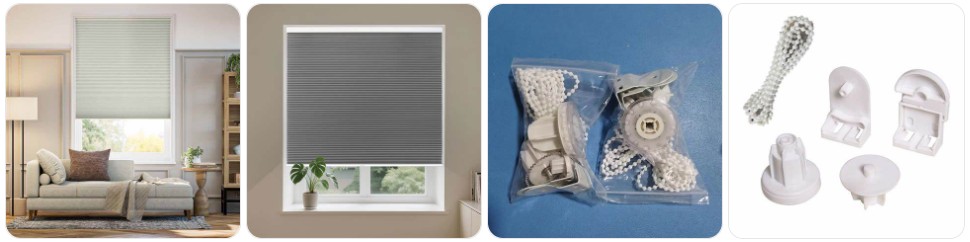
Cellular Blind replacement parts are often all you need to restore smooth operation, improve safety, and avoid replacing an otherwise good shade. Whether your shade has a slipping cord lock, frayed lift strings, cracked end caps, missing brackets, or a worn handle, the fix is usually faster and cheaper than a full new blind. In this guide, you will learn which parts commonly fail, how to identify the right match, when repair makes sense, and where to shop for items such as cellular blind cord locks, replacement brackets, and cellular blind repair kits.
Buy Cellular Blind Parts Online
This internal headrail part grips the lift cords and holds the honeycomb shade at the height you choose. When it wears out, the blind may slide down, refuse to stay level, or feel jerky during lifting. » find on amazon / find on ebay
Lift cords run through the pleated cells and bottom rail to raise and lower the shade evenly. Replacing frayed, stretched, or broken cords can restore balanced movement and prevent one side of the cellular blind from hanging lower. » find on amazon / find on ebay
Mounting brackets secure the headrail to the window frame or wall. Bent, missing, or incompatible brackets can make a cellular shade sag, rattle, or detach, especially on wider blinds or in frequently used rooms. » find on amazon / find on ebay
End caps and rail plugs protect the headrail or bottom rail edges and help keep internal parts aligned. If they crack or go missing, the rail can shift, scrape, or expose delicate components to impact and dust. » find on amazon / find on ebay
Handle grips are common on cordless and top-down bottom-up cellular shades. When the pull tab breaks or loosens, users tug directly on the fabric cells, which can crease the shade and put unnecessary strain on the bottom rail. » find on amazon / find on ebay
These small internal guides help keep lift cords aligned inside the headrail and rails. If they wear down or snap, the cords may rub, bind, or track unevenly, causing the shade to rise crookedly. » find on amazon / find on ebay
A repair kit is the most convenient option when you need several small parts at once, such as cord, restring needles, handles, cord locks, and guides. It is especially useful for older honeycomb shades with multiple minor failures. » find on amazon / find on ebay
Signs You Need Replacement Parts for Your Cellular Blind
- The shade drops back down after you raise it: On a standard corded cellular blind, this usually points to a worn cord lock rather than bad fabric. If the blind will not hold position, comparing replacement cord lock options is often the first practical step.
- One side of the honeycomb shade hangs lower than the other: Uneven lift is commonly caused by a stretched or frayed lift cord, a slipped internal guide, or a bottom rail connection that has come loose on one side of the cellular shade.
- The cells crush when you try to move a cordless shade: If you are pulling on the pleated fabric because the grip is missing, you likely need a new handle tab or bottom rail pull, not a new blind. Damaged grips are common on top-down bottom-up cellular blinds.
- The blind rattles or shifts inside the window opening: Cellular blinds that feel loose at the top often have a bent, cracked, or missing mounting bracket. That is especially common after repainting, removal for cleaning, or repeated snapping in and out.
- The headrail edges are exposed or scraping: Broken end caps or rail plugs can let the rail move sideways and expose delicate internal hardware. Replacing these small parts quickly can prevent larger alignment problems later.
- The lift action feels rough in one specific spot: On a honeycomb shade, that often means the cord is dragging through a worn guide, tension shoe, or internal path rather than the entire blind being worn out.
- The blind no longer stacks neatly when fully raised: Cellular blinds should compress into a tidy stack. If they bunch unevenly, the issue may be mismatched cord lengths, an internal guide problem, or an old restring job that no longer tracks correctly.
- The top-down or bottom-up rail will move, but not evenly: These shades use more specialized internal routing than a basic one-way cellular blind, so rail imbalance often points to a broken guide, detached handle, or internal cord problem rather than fabric failure alone.
D30 CORD LOOPS fits all brands.....Hunter Douglas, Levolor, Kirsch, Graber, Bali, USED on most cellular and pleated shades (2.7 mm) (White, 5 Ft Drop)

3 Pack Cordless Honeycomb Shade Lift Handles for Graber and Bali | Cordless Mini Blinds and Cellular Shades Made After 2015 (Fits 3/4" Pleat)
How to Identify the Right Cellular Blind Replacement Part
- Start with the operating style first: Check whether your shade is corded, cordless, or top-down bottom-up. A cord lock for a standard lift shade will not solve problems on a cordless rail system, and a top-down bottom-up cellular blind may use different handles, guides, and internal cord routing.
- Measure the headrail before buying anything: Many cellular blind parts are sized by headrail profile, not just by brand name. Measure the inside width and height of the metal headrail opening so your new bracket, cord lock, or end cap matches the shade hardware.
- Inspect the bottom rail connection points: If one side sags, remove the rail end cap and check whether the lift cords, plugs, and internal anchors are still seated evenly. Cellular blinds often look like they need full replacement when the real issue is a tiny bottom-rail part.
- Compare the existing part shape, not only the blind brand: Many private-label cellular shades share similar hardware. A close visual match on the cord lock body, bracket clip shape, or handle design is often more important than relying on an old sticker that may no longer be readable.
- Check whether the cells are single-cell or double-cell: This affects rail weight, lift resistance, and sometimes the best replacement cord thickness. Heavier double-cell blackout shades can need sturdier internal parts than light-filtering single-cell models.
- Look for wear patterns around the failure point: If cords are fuzzy near the headrail, focus on cord locks or guides. If fabric is creased where you grab it, the missing piece is often a pull tab or handle grip. If the entire unit shifts, start with the mounting hardware.
- Buy a kit when multiple small parts are suspect: If your cellular blind is older and shows more than one issue, a repair kit can save time because it bundles commonly needed items. You can compare cellular blind repair kits before ordering separate pieces one by one.
- Use bracket style to confirm inside-mount versus outside-mount setups: A blind installed inside the frame may use a different bracket depth or clip position than one installed on trim or wall. On cellular shades, the wrong bracket can make the headrail look compatible but fail to lock securely.
Should You Repair or Replace the Whole Cellular Blind?
In many cases, repairing a cellular blind is the smarter choice because the fabric cells and rails usually last longer than the small operating hardware inside them. If the problem is limited to a cord lock, bracket, handle, end cap, or restring job, replacement parts are normally much cheaper than buying a completely new shade. This is especially true for wider custom honeycomb shades, blackout cellular blinds, and top-down bottom-up units that cost significantly more to replace than to fix. For spot repairs, it often makes sense to start with individual cellular blind parts or a repair kit.
You should consider replacing the whole cellular blind when the pleated fabric is badly crushed across multiple sections, the cells are permanently stained or torn, the rails are bent, or the internal system has failed in several places at once. Repair also becomes less attractive when a very low-cost ready-made shade needs extensive re-cording and multiple hardware pieces. But if the blind still looks good and the issue is mechanical, a parts-based repair is usually the better value for a cellular shade specifically because the visible honeycomb material often remains usable long after the small moving parts wear out.

BlindsAvenue Cordless Cellular Shade, White, 27" W x 72" H | Light Filtering Pull Down Blinds for Indoor Windows, Thermal Insulation, Noise Reduction Honeycomb Shades for Home Privacy

DEZ FURNISHINGS Cordless 1" Light Filtering Cellular Shade, 29"W x 64"H, White

No Drill No Tools Blackout Cellular Shades,Cordless Blinds for Indoor Windows,Room Darkening Window Shades Honeycomb Blinds for Bedroom,Office,Home,White,34.5" w x 64" h
How to Prevent Parts Damage to Cellular Blind
- Lift the shade evenly every time: On corded cellular blinds, raise and lower the blind in a smooth motion instead of yanking one side. On cordless models, push or pull from the center handle so the bottom rail stays level and the internal guides wear evenly.
- Do not grab the honeycomb fabric cells directly: The pleated structure is designed for insulation, not as a handhold. Using the fabric instead of the pull tab can crush cells, loosen the bottom rail connection, and create the exact handle damage that later requires replacement parts.
- Keep the headrail free of dust buildup: Fine dust can work into the rail and around the lift path. Light cleaning around the headrail and rail ends helps reduce friction on cord locks, guides, and moving lift cords, especially in kitchens and sunny rooms.
- Avoid forcing a blind that feels jammed: If the cellular shade stops halfway or lifts unevenly, forcing it can turn a small guide or cord issue into a full restring job. Stop, inspect the rail, and check whether a bracket, end cap, or guide has shifted.
- Use the correct bracket support on wider shades: Wide cellular blinds put more stress on the headrail and clips. Replacing missing supports early helps prevent headrail twisting, loose fitment, and repeated strain on internal parts.
- Protect blackout cellular shades from moisture where possible: While the fabric itself may tolerate normal indoor humidity, bathrooms and steamy kitchens can speed up wear on metal hardware, adhesives, and some internal plastic parts hidden inside the rails.
- Re-seat loose end caps before they fall off: A small rail cap that keeps slipping out is easy to ignore, but once it disappears the exposed edge can let internal pieces drift out of alignment. Replacing small caps early is cheaper than fixing a cascading rail problem.
- Keep a matching repair kit on hand for older shades: If your home has several cellular blinds of the same type, storing a cellular blind repair kit can reduce downtime and help you fix minor problems before they damage the entire shade.
Cellular Blind Parts FAQ
What is the most common replacement part on a cellular blind?
The most commonly replaced part is usually the cord lock on corded shades, followed by lift cords, mounting brackets, and handle grips on cordless models. These parts wear out sooner than the fabric cells and are often responsible for slipping or uneven operation.
Can you restring a cellular blind instead of replacing it?
Yes, many cellular blinds can be restrung successfully when the fabric and rails are still in good condition. A restring job is often worthwhile when the shade is custom sized or expensive, especially if only the lift cord has frayed or snapped.
Are honeycomb blind parts and cellular blind parts the same thing?
Usually yes. Honeycomb blind and cellular blind are commonly used for the same style of shade, so parts are often marketed under both names. You should still match the headrail size, bracket shape, and operating system before ordering.
How do I know whether I need a bracket or a cord lock?
If the whole blind feels loose at the window or will not snap firmly into place, the issue is more likely the mounting bracket. If the shade installs normally but slides down or will not hold height, the problem is more likely the cord lock.
Is it worth buying a cellular blind repair kit?
A repair kit is worth it when your shade has more than one small failure, when you are not yet sure which internal piece is worn, or when you maintain several similar shades in the same home. It can be more cost-effective than ordering separate cords, guides, and tabs individually.
Can I use generic replacement parts on a cellular blind?
Sometimes, yes. Many cellular shades use similar generic hardware, especially brackets, cords, handles, and some cord locks. The key is to match dimensions and shape carefully, because even small differences in headrail profile can prevent a part from fitting correctly.
When should I replace the whole cellular blind instead of parts?
You should replace the full blind when the honeycomb fabric is torn in multiple places, the rails are bent, the blackout lining is failing badly, or the blind has several mechanical problems that would require extensive labor and multiple new parts.

60 PCS Vertical Blind Repair Tabs Kit Clear Fixer Verticle Blinds Snap in Replacement Slats Parts Panels

joytrace RV Pleated Shade Repair Kit, RV Window Shade Restringing Kit, Repair and Maintain of Day Night Pleated Shade (White)
